
Why ShineDay Starts with One Tiny Habit
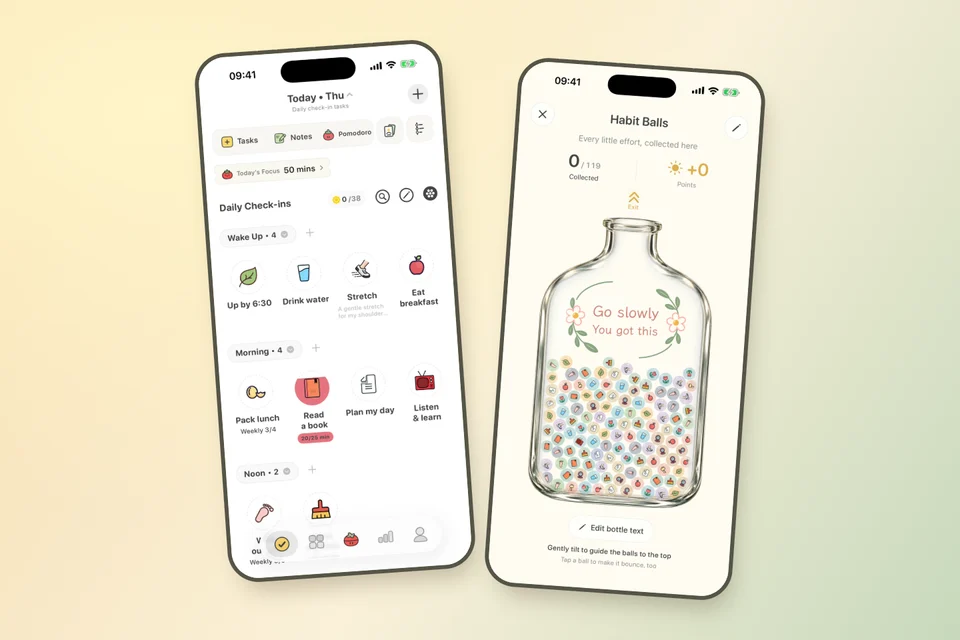
The coffee is poured. Your book is on the counter. How much would you have to read this morning to call yourself done? In ShineDay, one sentence is a perfectly good answer. We designed the app around micro-habits. Start with one action so small you can do it even on a morning when you’d usually talk yourself out of it. Read the sentence, check it off, and enjoy your coffee. You can build from there.
One sentence is a finished habit
Think of a book you’ve been meaning to read. Perhaps you’ve been saving it for an evening when you can give it a whole hour. Now picture an ordinary Tuesday. Dinner ran late, the kitchen needs clearing, and you still have a message to answer. It’s easy to spend the few quiet minutes you do have negotiating with yourself about whether you have enough time to read.
Stephen Guise, the author of Mini Habits, describes starting his exercise habit with one push-up. The important design choice was what counted as success. He could carry on exercising once he was on the floor, but one push-up fulfilled the day’s commitment. Borrow that idea for the book on your counter. Pick one sentence as the minimum before you open it. If you get to the period and put the book down, you’ve kept your word. Guise’s account of the one-push-up habit.
Why might that work on a tired morning? In BJ Fogg’s behavior model, an action happens when you have the motivation and ability to do it at the moment something prompts you. Shrinking the action changes how much effort the moment demands. At 7:45 you may love your book and still have five minutes to get out the door. A chapter won’t fit. A sentence will. Leaving the book open beside the mugs removes one more small job, finding your place, from those five minutes. Fogg’s explanation of the behavior model.
This is why a simple check-in has a place on Today. Give the habit a name that tells you exactly when it’s done, such as “Read one sentence.” You don’t need to decide how fast you read or whether you picked a sufficiently ambitious book. When you reach the full stop, tap the habit. Some mornings the next sentence will catch your eye. On a morning when the doorbell rings, you can close the book with the same sense of completion.
Let the coffee remind you
Tomorrow’s harder question might be remembering to open the book at all. You probably already pour a cup of coffee without having to put it on a list. Give that familiar action one small addition. “After I pour my coffee, I’ll read one sentence.” This is habit stacking. The end of something you already do gives the new action a time and a place. The mug landing on the counter is a more useful cue than a vague intention to read sometime before lunch.
Habit groups give that sequence a home in ShineDay. Put “Read one sentence” in your Morning group. If coffee is already automatic, it can simply be the cue that lives in your kitchen. Later, if there’s a line you’d like to remember, let the sentence cue one more action. Finish reading it, then write down one word from it. Put that little note-taking habit in Morning alongside reading. Now when you open Today, you can see the two things you want to do while the book is in your hand.
What changes after a few mornings together? In a twelve-week field study, Phillippa Lally and her colleagues asked volunteers to choose an eating, drinking, or activity habit and repeat it in a consistent situation. Most participants reported that starting their action became more automatic over time. The pace varied from person to person. For our reader, that might feel like setting down the mug and reaching for the bookmark before having to ask, “When was I going to read today?” Lally and colleagues’ study of everyday habit formation.
That distinction matters when you set up a habit group. Putting two icons next to each other gives you a plan you can see. Pouring the coffee and then opening the book gives you the sequence you can practice. If a few mornings go by and the book stays shut, walk through one of them. Maybe you take your coffee straight to the car. Leaving the book by your lunch container and reading after you sit down to eat may give the same tiny habit a better home.
Give the habit room to grow
One morning you finish a paragraph because you want to know what happens. A few days later, you take the book to lunch. This is the kind of growth we want ShineDay to leave room for. A good day can tell you that you enjoy reading longer. It doesn’t have to set the price of admission for every morning after it. You might keep the one-sentence habit for months and regularly read several pages.
Suppose Monday’s chapter is wonderful and you read for half an hour. On Tuesday a single sentence still counts. By keeping the minimum steady, you can enjoy Monday’s extra pages without quietly promising half an hour for the rest of the week. If Wednesday slips by altogether, Thursday’s next step is still one sentence. In Lally’s study, a single missed opportunity made little difference to the overall process. You can pick up at the bookmark without assigning yourself a second chapter to catch up.
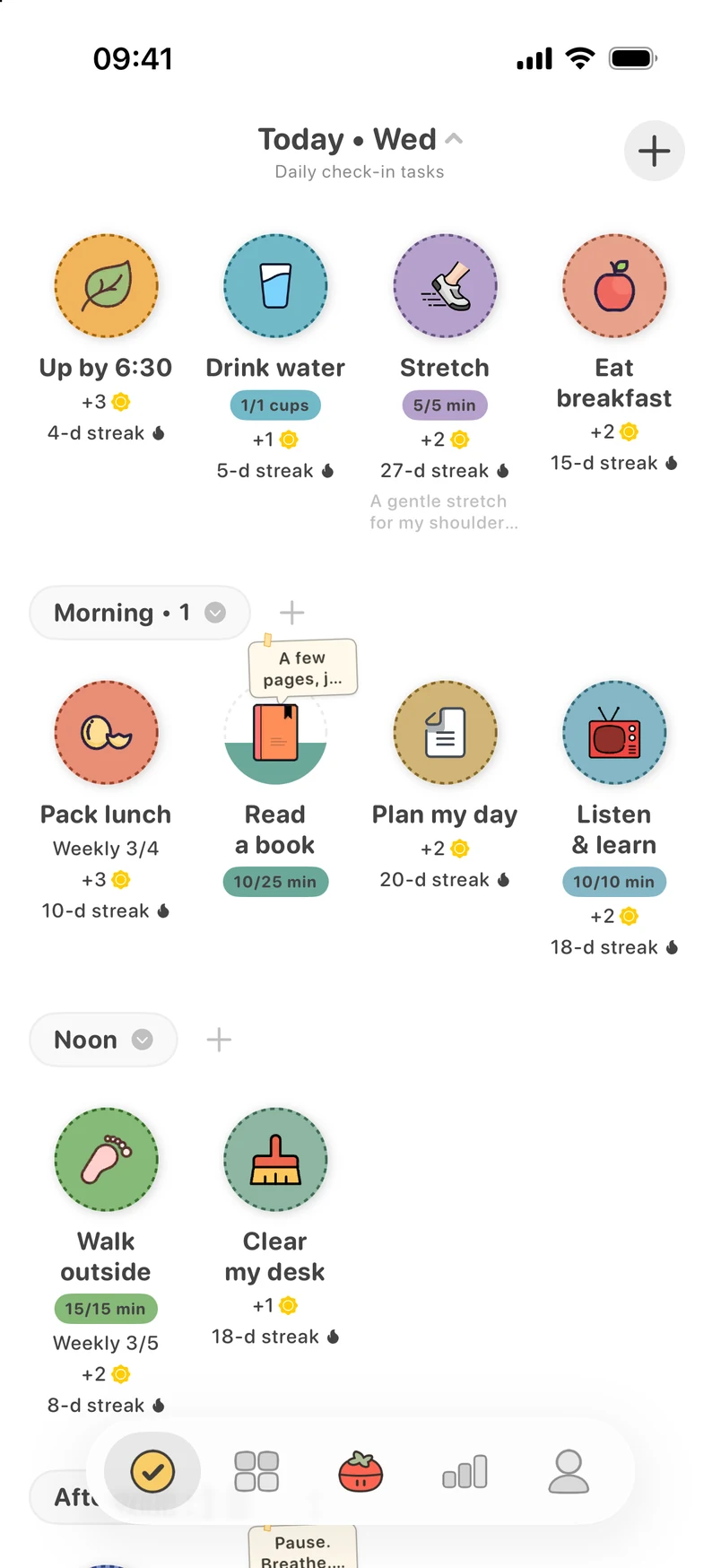
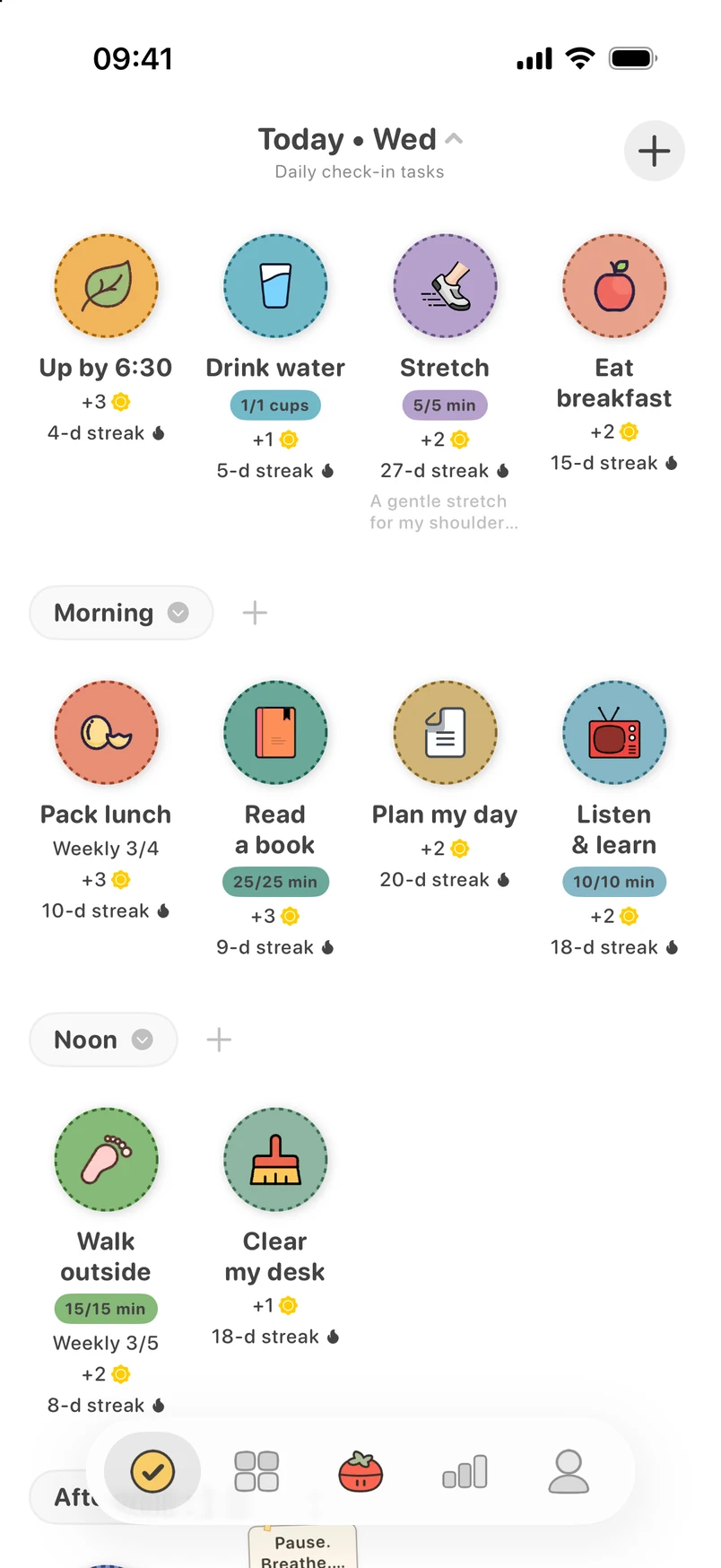
If you start wondering how much time you spend with the book, a quantity goal becomes useful. The screenshots below show a reader who has reached that stage and chosen twenty-five minutes. Ten minutes at lunch leave a visible record. Another fifteen after dinner bring the total to twenty-five. On a night when dinner runs late, the ten minutes are still there. That record gives you something accurate to build on when you next choose a goal.
Make the check-in a moment to enjoy
There’s a small design problem with a habit that takes ten seconds. You can do it, hurry to catch the bus, and get to bedtime feeling as though you never got around to reading. In Tiny Habits, Fogg gives the moment just after the action a job of its own. He suggests choosing a small celebration that genuinely feels good. The coffee is your cue, the sentence is your action, and the moment you smile and think “I’m glad I did that” is the celebration. Fogg’s Tiny Habits recipe card (PDF).
In ShineDay, a check-in is an invitation to enjoy that moment in your own way. Close the book, tap its icon on Today, and take a second to notice what you just did. Someone else might get the same satisfaction from sliding a paper bookmark down one line. For a person who likes collecting small, colorful things, we wanted the tap itself to be a pleasure.
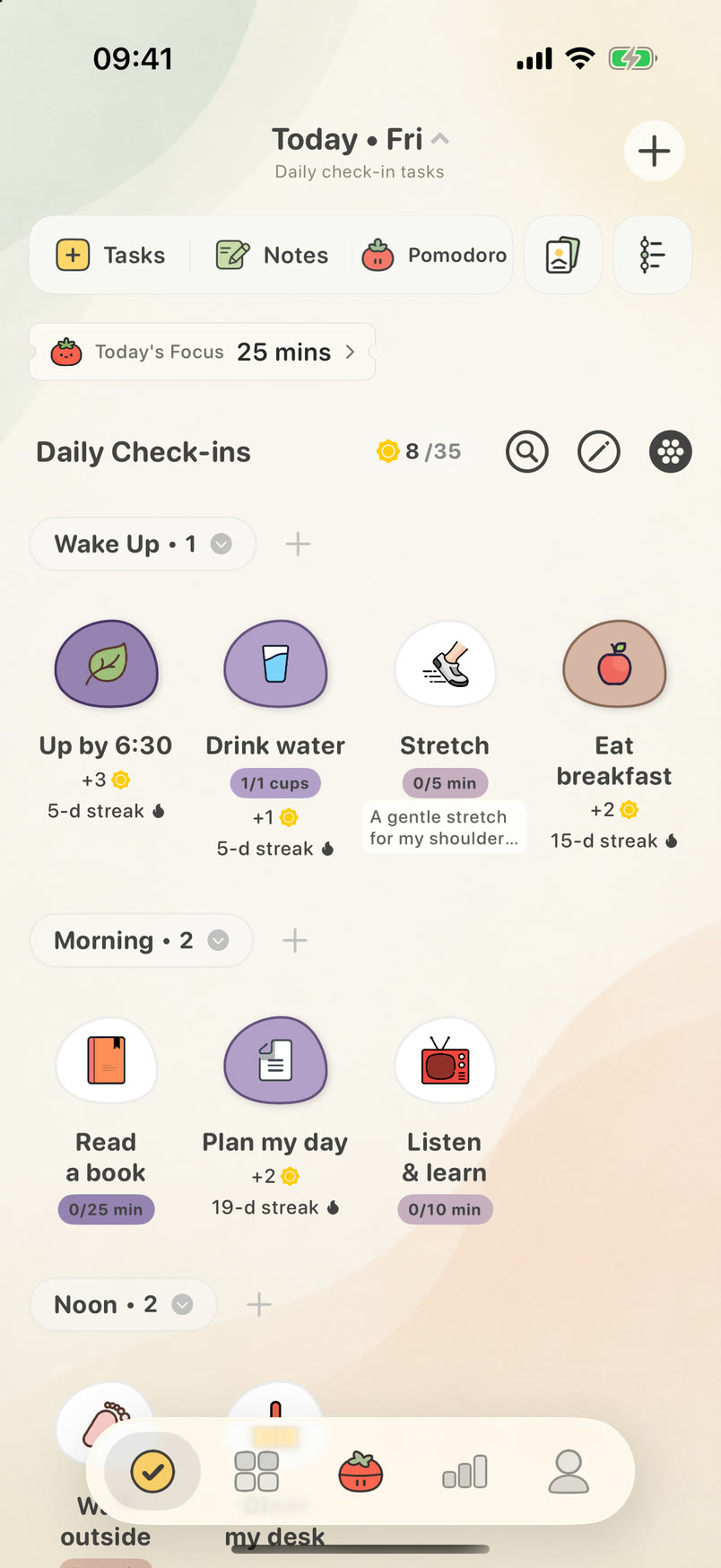
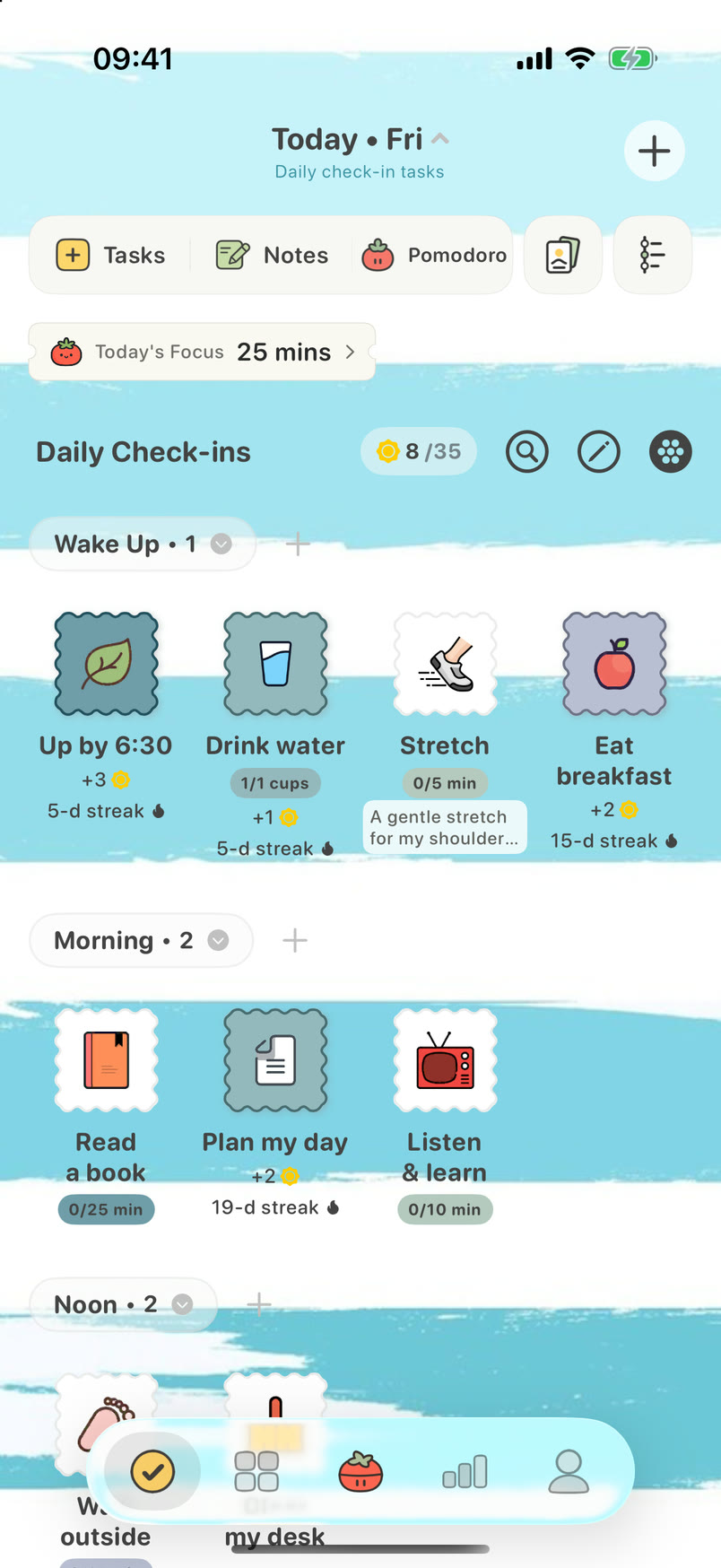
Find the book in the two Morning groups below. In Mistlight it sits inside a softly rounded pebble. In Santorini it looks like a postage stamp you might peel off a sheet. The label and its place in the row are familiar in both. You can choose the version that makes you smile. When you’ve only read a sentence, there can still be something satisfying about finding your little book and tapping it.
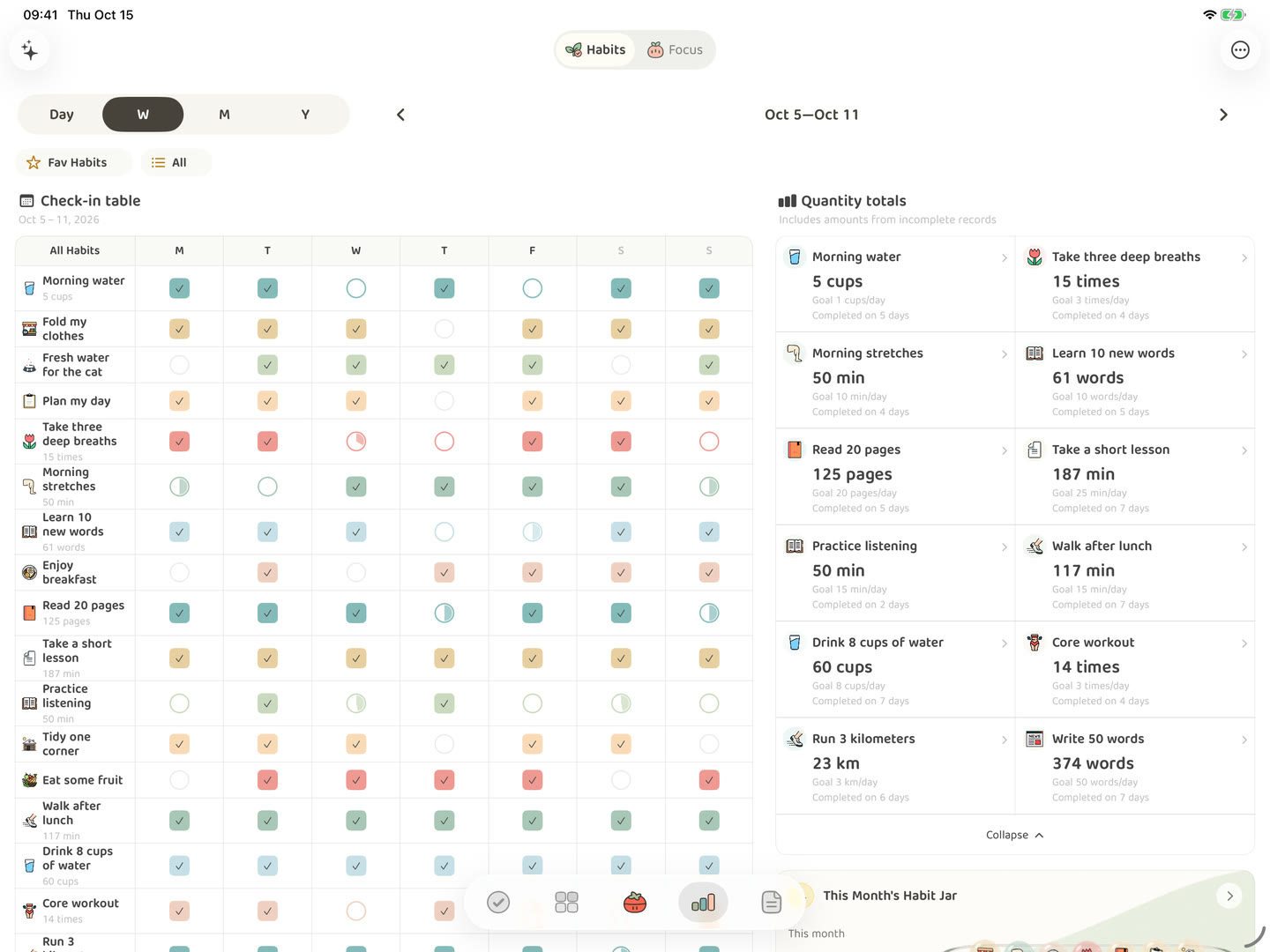
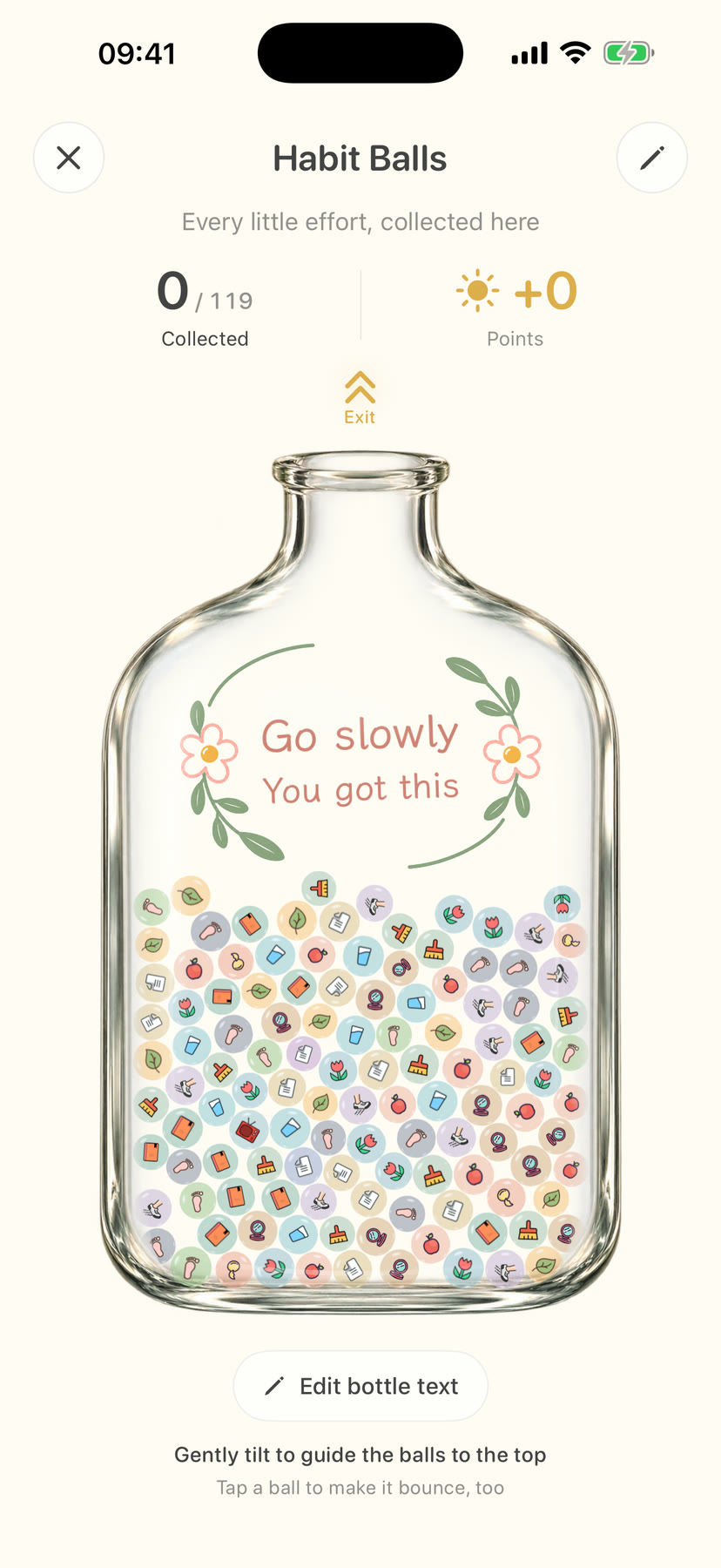
Habit Balls carries that feeling beyond the tap. Completed check-ins add colorful balls to a monthly jar, each carrying its habit’s icon. Look closely and you can pick out a book among the water glasses and stretches. A tiny reading session is easy to forget by Friday. A little book sitting in the jar is a pleasing reminder that you made time for it. Enjoying that moment of accomplishment can be one more reason to open the book tomorrow.
What fits beside your mug tomorrow?
Tonight, try leaving the book beside your usual mug with the bookmark where you stopped. In the morning, pour your coffee and read the next sentence. If you get curious, read on. If you hear the bus coming, put the bookmark back and go. Both mornings keep the promise you made. After a few such mornings, you’ll have a much better feel for what you’d enjoy adding, whether that’s another paragraph or a word scribbled in the margin.
You can get a feel for that last little moment in the ShineDay demo. Choose one sample habit on Today, tap to check in, and see it appear in the Habits report. One check-in is plenty for a first visit.